Attachment Styles At Work: Are You Over-Investing Emotionally?
- 2 days ago

Attachment styles are most commonly associated with romantic partnerships. But did you know that the way you form connections at work, how you respond to feedback, handle team dynamics, or deal with conflict, can also be influenced by your attachment style?
Some people crave constant validation from their managers. Others detach and isolate themselves. And some swing between wanting to connect and pushing people away.
If you’ve ever felt overly stressed about how you’re perceived at work, or emotionally drained by your job, your attachment style might be playing a bigger role than you think.
What Are Attachment Styles?
Attachment styles are psychological patterns that develop in early childhood based on how our caregivers responded to our emotional needs. These patterns shape how we relate to others throughout life, not just in romantic relationships, but also in friendships, family, and the workplace.
Read This - Psychology Tips: 5 Things You Should Keep Private At Your Workplace
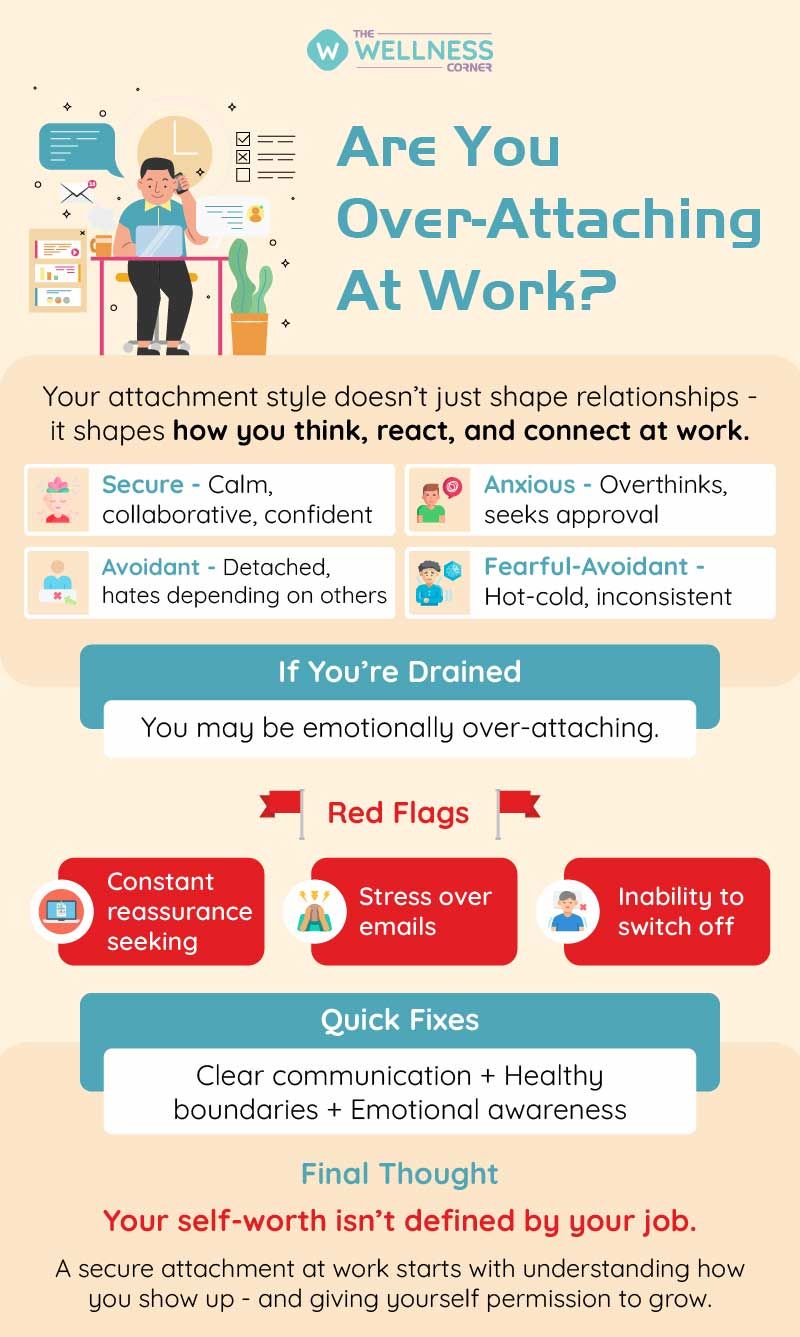
There are four main attachment styles:
1. Secure Attachment
2. Anxious Attachment
3. Avoidant Attachment
4. Fearful-Avoidant (Disorganized) Attachment
Each of these styles influences how we behave in professional settings, from how we handle deadlines to how we respond to authority.
Also Read: Why Is It Important To Know Your Attachment Style For A Healthy Relationship?
Attachment Styles At Work: How They Show Up?
Let’s break down how each attachment style affects your emotions, actions, and relationships in a professional setting.
1. Secure Attachment: Calm, Confident, And Balanced
People with secure attachment feel comfortable with both closeness and independence. At work, they tend to:
- Collaborate well with teammates
- Accept constructive criticism without taking it personally
- Set healthy boundaries between work and personal life
- Manage stress effectively
- Trust others and are trustworthy themselves
Example
If a secure employee receives a blunt email from their manager, they don’t spiral. They might assume the manager is busy and follow up for clarity rather than panicking.

2. Anxious Attachment: Overthinking And Over-Investing
Those who experience anxious attachment frequently crave approval and are afraid of rejection. They may:
- Feel personally affected by the tone of emails or comments
- Over-apologize or people-please to avoid conflict
- Get anxious when not included in meetings or group chats
- Work overtime just to be seen as “dedicated.”
- Crave frequent reassurance from supervisors or teammates
Example
An employee with anxious attachment might spend hours worrying that they’ve upset their boss if they didn’t get a smile during a meeting.
Cost: This constant emotional investment leads to burnout, low self-esteem, and dependence on external validation.
3. Avoidant Attachment: Detached And Distant
Avoidantly attached individuals prefer emotional distance. At work, they might:
- Avoid team bonding or close collaboration
- Shut down during feedback conversations
- Be hyper-independent and reluctant to ask for help
- Struggle to trust leadership or delegate tasks
- Appear emotionally detached or cold
Example
They may view small talk or relationship-building as a waste of time and prefer roles where they can work solo.
Cost: Avoidant types often miss out on opportunities for growth, mentorship, or creative collaboration.
4. Fearful-Avoidant Attachment: Torn Between Wanting And Avoiding Connection
This approach combines anxiety and avoidance. People with this attachment may:
- Crave connection but fear rejection
- Be inconsistent in their communication or performance
- Worry that coworkers don’t like them, but push people away
- Feel overwhelmed by both praise and criticism
Example
They might do excellent work one week and completely withdraw the next due to internal emotional conflict.
Cost: High stress levels, difficulty building trust, and unpredictable relationships at work.
Signs You Might Be Over-Investing Emotionally At Work
Not sure where you stand? Here are some common signs:
- You feel emotionally hurt when you’re left out of an email chain or meeting.
- You can’t stop thinking about a small disagreement or criticism.
- Your self-worth rises and falls based on your performance reviews.
- You stay late or take on too much to gain approval.
- You panic when a colleague’s tone changes, even slightly.
- You struggle to disconnect from work mentally, even on weekends.
Emotional over-investment isn’t just exhausting; it can hurt your mental health, productivity, and job satisfaction over time.
Also Read: How To Deal With Workplace Anxiety And Boost Productivity?
Why Do Attachment Styles Matter In The Workplace?
Work isn’t just about tasks and to-do lists; it’s also about relationships, communication, and emotional safety. If your attachment style is causing you to overreact, withdraw, or seek constant validation, it can create:
- Misunderstandings with coworkers
- Conflicts that feel bigger than they are
- Burnout from overworking or internalizing stress
- Avoidance of necessary feedback or change
- Dependence on external approval to feel confident
The workplace can trigger deep-seated insecurities you may not even be aware of, and that’s why becoming aware of your style matters.

How To Move Toward A Secure Attachment At Work?
Whether you identify as anxious, avoidant, or somewhere in between, the good news is - attachment styles are not fixed. With self-awareness and effort, you can cultivate a more secure personality and healthier emotional habits.
1. Reflect On Triggers
- What situations at work make you feel most insecure or overwhelmed?
- When you feel anxious or avoidant, ask: “What am I afraid of right now?”
2. Regulate Your Emotions
- Engage in journaling, deep breathing, or taking a stroll.
- Respond rather than react, particularly during challenging conversations.
3. Create Healthy Boundaries
- You can care about your job without tying your identity to it
- Saying “no” or asking for help is not a weakness
4. Communicate Assertively
- Express needs clearly without fear of being disliked
- Ask for feedback openly without attaching your self-worth to it
5. Detach With Compassion
- You can be kind, helpful, and collaborative - without over-functioning emotionally
- Learn to say: “I did my part. That’s enough.”
6. Build A Support Network
- Talk to a therapist or coach if work triggers anxiety or insecurity
- Having healthy relationships outside of work creates emotional stability
Final Thoughts: Self-Worth ≠ Work Performance
Understanding your attachment style at work isn’t about labeling yourself; it’s about creating space for change. If you constantly feel emotionally drained, unseen, or overwhelmed at work, it’s time to ask:
“Am I over-attaching? Am I trying to meet emotional needs through my job that should be met elsewhere?”
Work is important. But your mental and emotional well-being are more important.
You deserve to feel valued, balanced, and secure - not just as an employee, but as a whole person.
Leave a Comment
You must be logged in to post a comment.
Recently Published






© 2025 Truworth Health Technologies Pvt. Ltd.Terms of UsePrivacy Policy