How To Handle Pressure From Work? (With Practical Tips)
1 day ago
5 minute read.

Workplace stress is something that practically every professional faces at some point. While a little stress can motivate you to perform better, constant and unmanaged pressure can impact both your mental and physical health. If left unchecked, it can lead to burnout, decreased productivity, and even long-term health issues.
But here’s the thing, pressure is not always the problem. It’s often how we respond to it that determines the outcome. So, instead of allowing pressure to rule you, take charge of how you react to it.
40% of employees globally reported experiencing high levels of stress “a lot of the previous day,” highlighting how prevalent stress is among workers around the world.
Work environment is a major determinant of mental health: According to the WHO, employment can both support and undermine mental health depending on job conditions and support systems.
Also Read: Attachment Styles At Work: Are You Over-Investing Emotionally?
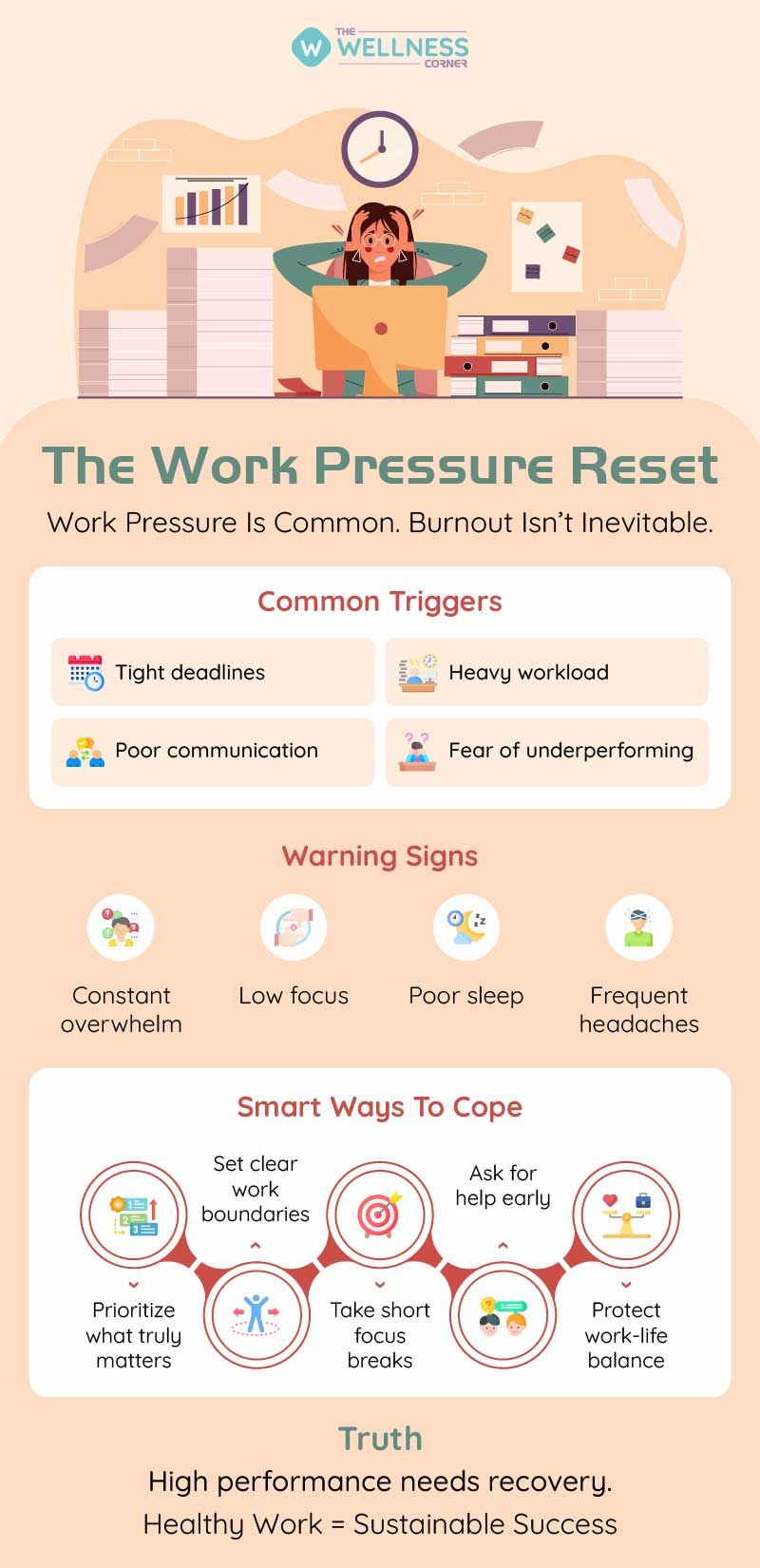
What Causes Pressure At Work?
Workplace pressure can come from multiple sources, such as:
- Tight deadlines and urgent deliverables
- High workload with little downtime
- Micromanagement or lack of autonomy
- Poor communication or unclear instructions
- Lack of support from colleagues or leadership
- Fear of job loss or underperformance
- Unrealistic expectations or perfectionism
- Personal issues spilling into work life
These pressures can build up over time, and when not managed effectively, they begin to impact your mental clarity, decision-making, and overall performance.

How To Know You're Under Too Much Pressure?
Before diving into solutions, it’s important to recognize when pressure is becoming a problem. Here are some signs:
- You feel constantly overwhelmed and on edge
- You’re making more mistakes than usual
- You find it hard to concentrate or focus
- You experience irritability, anxiety, or mood swings
- You have trouble sleeping or feel exhausted even after rest
- You experience physical symptoms like headaches, chest tightness, or digestive problems
- You’re losing interest in your work or hobbies
These are your body and mind’s way of telling you that it’s time to slow down and reset.
10 Practical Tips To Handle Work Pressure
Let’s break down ten effective strategies you can implement today to reduce work pressure and regain control:
1. Prioritize Tasks Wisely
Start your day with a plan. Create a to-do list and categorize tasks into:
- Urgent and Important
- Important but Not Urgent
- Urgent but Not Important
- Neither Urgent nor Important
This framework (based on the Eisenhower Matrix) helps you focus on what truly matters instead of reacting to everything.
Tip: Use tools like Google Keep, Notion, or Trello for task management.
2. Set Boundaries With Your Time
Working overtime occasionally is fine, but doing it regularly is a recipe for burnout. Communicate clearly about:
- When you are available:
Passive Communication (Unclear & Self-Sacrificing)
Passive responses often avoid conflict but quietly increase pressure and resentment.
Impact: Others assume constant availability, and over time slowly becomes the expectation.
Assertive Communication (Clear & Respectful)
Assertiveness sets boundaries without sounding rude or uncooperative.
Impact: Expectations stay realistic, productivity improves, and burnout risk drops.
- Your task limits
- Expected timelines
Don’t say yes to everything out of guilt.
Say: “I’d love to help, but I’ll need to finish my current task first. Can we set a timeline that works for both of us?”
Also Read: Communication And Conflict Resolution At The Workplace
3. Break Tasks Into Smaller Chunks
Large tasks often feel more overwhelming than they are. Breaking them into smaller, manageable steps makes them feel less intimidating and gives you a sense of progress with each step completed.
This also helps your brain focus on ‘what’s next’ instead of getting lost in the big picture.
4. Take Short, Regular Breaks
Working non-stop drains your focus. The human brain can only maintain deep concentration for around 45-60 minutes at a stretch.
Use methods like:
- Pomodoro Technique (25 mins work, 5 mins break)
- 50/10 rule (50 minutes focused work, 10-minute break)
During breaks, avoid screens. Stretch, take a short stroll, or practice breathing exercises.
5. Communicate And Delegate
You don’t have to do everything yourself. If you’re part of a team, ask for help when needed. Share the load instead of shouldering it all.
If you're a manager, ensure your team isn’t overwhelmed, and that delegation is done fairly.
Speak up early if your workload is too heavy, rather than waiting until a crisis point.

6. Avoid Multitasking
It might seem productive to juggle multiple tasks, but multitasking often leads to reduced quality, increased stress, and more time spent switching between tasks.
Research shows that when people switch between tasks, the brain incurs a “switching cost” that actually slows productivity and drains mental energy.
Focus on one thing at a time, especially when working on complex tasks. You’ll get more done in less time.
7. Use Stress Management Techniques
When you feel pressure building up:
- Practice deep breathing (Inhale 4s, hold 4s, exhale 4s, hold 4s)
- Stretch at your desk
- Listen to calming music
- Take a few moments to reflect or journal
These help regulate your nervous system and reboot your emotional state.
Also Read: Deep Breathing & Techniques To Relieve Anxiety: Learn How To Do It Right!

8. Take Care Of Your Body
Your physical health plays a massive role in how you handle stress. Make sure you:
- Get 7-8 hours of quality sleep
- Eat balanced meals, don’t skip breakfast or lunch
- Stay hydrated throughout the day
- Exercise regularly, even if it’s just 20 minutes of walking or yoga
When your body feels good, your mental resilience improves, too.
9. Separate Work And Personal Life
Blurring the lines between work and home life can prolong stress. Especially in remote setups, create harmony:
- Have a fixed workspace
- Shut down your laptop after working hours
- Avoid checking emails during dinner or relaxation time
Protecting your time helps you return to work refreshed and focused.
10. Reflect And Reassess
Ask yourself from time to time:
- Am I putting too much pressure on myself?
- Is this expectation realistic?
- Can I approach this differently?
Journaling your thoughts can help you gain perspective and stop negative thinking loops. If pressure is constant, it may be worth reassessing your job role, expectations, or career path.
When Is It More Than Just Pressure?
If you’re trying everything and still feel exhausted, disconnected, or emotionally drained, you might be dealing with burnout, not just stress.
Burnout needs deeper support. Consider:
- Talking to your manager about flexible options
- Taking mental health days
- Speaking with a therapist or counselor
- Exploring employee wellness programs
Your health comes first; you can’t pour from an empty cup.
Also Read: Burnout Busters – Recognizing & Preventing Burnout Before It Sneaks Up
Final Thoughts
Handling pressure from work is not about becoming a superhero; it’s about working smarter, listening to your mind and body, and choosing what truly matters.
Here’s a recap of the top 10 strategies:
1. Prioritize and plan
2. Set realistic boundaries
3. Break big tasks into smaller steps
4. Take regular breaks
5. Communicate and delegate
6. Stop multitasking
7. Manage stress through breathing and mindfulness
8. Stay physically healthy
9. Create work-life boundaries
10. Reflect regularly
Remember: You’re more than your job title. Your health, peace of mind, and happiness matter.
Start small, try one or two changes this week, and notice how you begin to feel more in control.
Leave a Comment

Sign-Up Now & Unlock
₹100 Cashback
Recently Published
Related Articles




Health Checks @ Home
Service
Explore



Follow us on:


© 2025 Truworth Health Technologies Pvt. Ltd.